
Our Uranium: Pandora’s Box
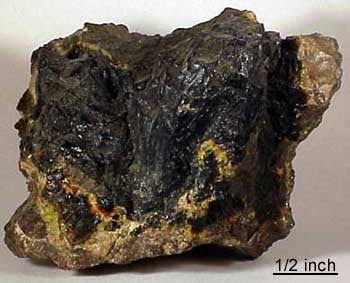
The issue of Congolese uranium is currently the subject of in-depth discussions in the national and international press, business circles, and on social media. This topic has been the subject of much speculation and was investigated by researchers from the University of Wisconsin-Madison and Princeton (Ryan A. Manzuk and Sébastien Philippe) for the Financial Times’ investigative media outlet, Lighthouse Reports. The investigation was based on leaked documents from Tenke Fungurume (TFM, operated by CMOC and, prior to 2016, by Freeport-McMoRan Copper & Gold), documents obtained from STUK (the Finnish Radiation and Nuclear Safety Authority) and other sources. According to the researchers, “Between 2,000 and 5,000 metric tons of natural uranium were reportedly exported from TFM between 2000 and 2024, mixed into shipments of cobalt hydroxides bound for China.” Multiple sources confirm that this quantity was exported without oversight from the International Atomic Energy Agency (IAEA). The IAEA states that this quantity of uranium is sufficient to produce 600 nuclear warheads.
Photo: Uranium in the form of pitchblende. Image Source: Earth Science Museum, Waterloo University, Waterloo, Ontario, Canada
Reactions were swift. CMOC, TFM’s mining operator, issued a statement denying that its cobalt was contaminated with uranium at levels exceeding applicable limits and stating that all its cobalt hydroxides comply with DRC regulatory requirements. China, through the Union of Chinese-Owned Mining Companies in the DRC (USMCC), also responded by calling the reports ‘baseless’.
The Congolese government stated that “the natural presence of uranium in the copper and cobalt deposits of the Lualaba and Haut-Katanga provinces is a geological fact that has been established and documented for over a century”. To clarify the situation, the government announced it would conduct a counter-analysis with the help of an interministerial working group, supported by a national laboratory and an accredited international laboratory. The group is jointly led by the National Committee for Protection against Ionizing Radiation (CNPRI), the General Commission for Atomic Energy (CGEA), and the Center for Expertise, Evaluation and Certification (CEEC). Their report is expected within 60 days.
However, the investigation also revealed that, as early as 2009, the IAEA had reported “reliable information” indicating that uranium from the Congo had been “actually exported as a by-product of cobalt”.
China obtains two minerals through a single extraction process with these hydroxides, as it controls the majority of Congo’s cobalt mines. Nevertheless, the investigation concludes that it is not possible to determine the subsequent use of this uranium in China (37,703.05 metric tons exported by the CMOC Group — TFM & Kisanfu — in the first half of 2026). In other words, it is not possible to confirm that the uranium found in the CMOC Group’s cobalt hydroxides was specifically used in China’s nuclear program. It should be noted, however, that China has been operating 58 nuclear reactors (with approximately 56.4 GW of installed capacity) since the beginning of 2026, and has a further 33 units (with more than 35 GW) under construction. How should we understand this dangerous mineral, uranium?
Uranium, now a Critical Mineral
Uranium (U) is a chemical element that occupies the 92nd position in the periodic table. It belongs to the actinides, a group of elements that are all radioactive due to their unstable nuclei, which emit radiation during natural decay.
Like all elements, uranium consists primarily of three very similar isotopes, distinguishable by their mass (or weight): uranium-234 (234U), uranium-238 (238U), and uranium-235 (235U). The latter is the isotope used in nuclear reactors to generate electricity because it is fissile, meaning it can split into many smaller pieces. These unique properties make uranium the primary fuel source for nuclear reactors. A quantity of uranium the size of a chicken egg can produce as much electricity as 88 metric tons of coal.
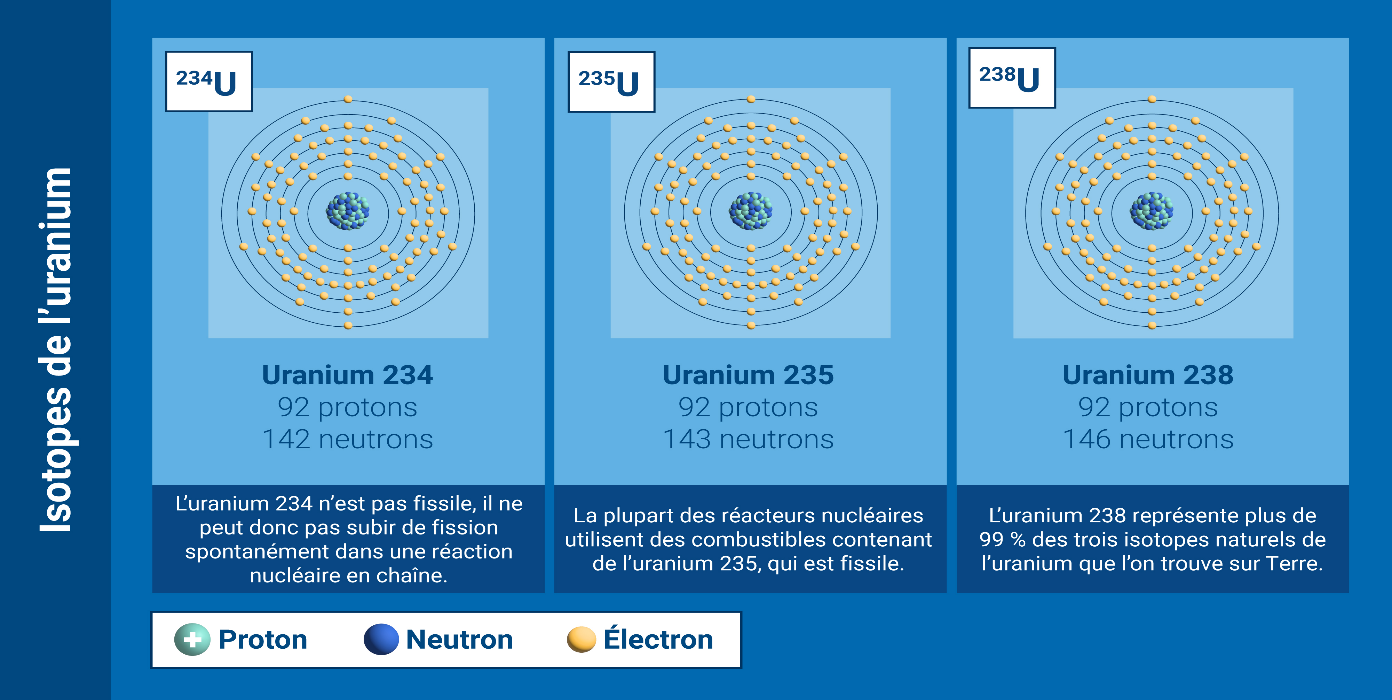
“Uranium is one of the most abundant elements in the Earth’s crust—it is about 500 times more common than gold. Although it seems very rare, uranium is actually present everywhere in minute quantities—in rock, soil, water, and even in our bodies. The ocean also contains large amounts of highly dissolved uranium, approximately four billion metric tons.” (Source: IAEA—International Atomic Energy Agency)
Considered a critical mineral since 2025, uranium is an important element in the energy sector. Global demand for uranium is increasing, with around 60 nuclear reactors currently under construction worldwide. According to figures published by the World Nuclear Association in 2024, global uranium production totaled 60,213 metric tons. The rising global demand for electricity has caused the spot price of U3O8 to soar from $88 per pound in 2017 to $72 per pound in 2024. This increase has been driven by the electrification of various applications, such as electric vehicles, industrial reshoring, and, above all, the explosion of data centers linked to artificial intelligence, which have all led to price fluctuations.
Uranium – Global Production and Reserves
Uranium Production by Tons | Global Reserves by MT | ||||
Rank | Country | Year 2024 | Rank | Country | Year 2023 |
1 | Kazakhstan | 23,270 | 1 | Australia | 3,6 million |
2 | Canada | 14,309 | 2 | Kazakhstan | 2,9 million |
3 | Namibia | 7,333 | 3 | Canada | 1,7 million |
4 | Uzbekistan | 4,000 | 4 | Russia | 1,2 million |
5 | Russia | 2,738 | 5 | Namibia | 1,1 million |
6 | China | 1,600 | 6 | South Africa | 985 000 |
7 | Niger | 962 | 7 | Niger | 821 700 |
8 | India | 500 | 8 | China | 810 000 |
(Source: World Nuclear Association) (Source: World Population Review)
In the DRC, it was estimated in the 1950s that the Shinkolobwe mine contained around half of the world’s known uranium reserves. However, the DRC currently has no official commercial uranium production or active statutory reserves. While uranium also exists in Kivu and Maniema in unspecified quantities, the DRC is officially not a uranium producer. The best-known mine is Shinkolobwe.
Shinkolobwe Mine
The town of Shinkolobwe is located near Likasi, approximately halfway between Kolwezi and Lubumbashi in the Haut-Katanga province (DRC). It is home to the eponymous mine. The Shinkolobwe uranium deposit was discovered in 1915 by Robert Rich Sharp. Mining operations began there in 1921 under the Union Minière du Haut Katanga (UMHK), now known as Gécamines. The uranium ore was shipped to Belgium for radium extraction, which had been discovered by Marie Curie. Mining operations ceased for several years due to water ingress in the mine but resumed during World War II.
In 1940, Belgium opened the Pandora Box
In fact, on 2 August 1939, Albert Einstein, alarmed by the possibility of a nuclear chain reaction and German ambitions regarding uranium, wrote to President Franklin D. Roosevelt to explain that uranium could be used as a new energy source or to manufacture weapons of unprecedented power. Recognizing the scarcity of American reserves, Einstein also recommended turning to the Belgian Congo, whose uranium ore was considered a major strategic resource due to its exceptional purity.
The Manhattan Project
Washington’s response was swift. Roosevelt established an advisory committee on uranium, bringing together several leading physicists, while discreet efforts were simultaneously made to secure supplies. Meanwhile, behind the scenes, Edgar Sengier, the head of the Union Minière du Haut-Katanga (UMHK), effectively placed a weapon of mass destruction in American hands by shipping uranium to them under the guise of anonymity. This partnership resulted in a de facto American monopoly on Congolese uranium, secured through secret agreements with the British and Belgian governments-in-exile.
The Shinkolobwe mine, which had been plagued by drainage issues, was swiftly brought back into operation by the US Army and became a cornerstone of the American atomic program. Under Belgian colonial control, thousands of Congolese workers had mined the ore there under extremely harsh conditions and without any protection against radiation. Between 1942 and 1944, more than 30,000 metric tons of ore were secretly shipped to the United States, fueling a program that had become a top priority during the Second World War.

From a scientific standpoint, the research quickly reached a milestone. Work on enriching uranium-235, followed by the discovery of plutonium as a new fissile material, paved the way for two parallel tracks. In January 1943, the program definitively moved beyond the experimental stage and entered the industrial era, marking the birth of the Manhattan Project under the authority of General Leslie Groves with exceptional human, technical, and financial resources. Major centers were then established at Oak Ridge, Hanford and Los Alamos, which attracted an unparalleled scientific elite. At Los Alamos, Robert Oppenheimer led a team of leading physicists, including several future or past Nobel laureates. Working under the utmost secrecy, these researchers developed the nuclear weapon, culminating in the first successful test in the New Mexico desert on 16 July 1945.
Just a few weeks later, this scientific breakthrough became part of the tragic history of the 20th century. On August 6, 1945, Pandora’s box was opened, and the Congo entered the atomic age. Hiroshima was struck by an American atomic bomb. Three days later, Nagasaki suffered a nuclear attack in turn. The bombings caused immense destruction and loss of life, permanently etching the Manhattan Project into the collective memory as a time when scientific prowess, geopolitical calculation, and human catastrophe were intertwined.
Patrice Lumumba’s Demand
After the war, the agreement between the United States and Belgium was renewed. Until the late 1950s, the Congo was Washington’s primary global source of uranium. In 1957, the United States gifted Belgium its first nuclear reactor, the BR1 (Belgian Reactor 1), in Mol, to thank the country for supplying uranium from Katanga to the Manhattan Project. However, as the Congo approached independence in 1960, the geopolitical landscape shifted due to two key events:
- The future prime minister, Patrice Lumumba, declared that an independent Congo should negotiate its own mining agreements directly with the United States. He emphasized that “Belgium does not produce uranium”.
- Fearing that it would lose control of the Shinkolobwe mine, the UMHK officially flooded and sealed the mine under tons of concrete just before the Congo gained independence in 1960. The Congolese army was stationed there to guard the mine until 1997.
Patrice Lumumba was assassinated in 1961 in Haut-Katanga, where the Shinkolobwe mine is located. This ended his dream of seeing the Congo determine the fate of its minerals. These secret agreements enriched the Belgian government and the Union Minière with significant financial and technological benefits. Belgium continued to profit from Congolese uranium for years after the war, as evidenced by the “Plumbat Affair.”
The « Plumbat » Project
In 1968, Belgium took advantage of the political rift between France, a uranium supplier, and Israel, which stemmed from the 1967 war between Israel and Arab countries. Belgium sold Israel 200 metric tons of yellowcake (processed uranium) from the UHMK’s stockpile at Shinkolobwe to help develop the Dimona nuclear reactor. As part of a covert operation called Plumbat, the Israeli intelligence agency Mossad succeeded in transporting the yellowcake from Antwerp to Haifa, Israel, to expand the country’s nuclear arsenal. In doing so, Belgium violated Euratom’s rules on the control of nuclear materials. (Source: The Plumbat Affair by Elaine Davenport, Paul Eddy, and Peter Gillman, published by Futura Publications Ltd. in 1978).
The Closure of the Shinkolobwe Mine
Despite the UMHK’s closure of the mine, Congolese miners continue to risk their lives there to extract uranium and cobalt. After a shaft collapsed in 2004, killing eight people, President Joseph Kabila signed a decree designating Shinkolobwe a no-mining zone.
Nevertheless, people still venture there at their own risk to extract the cobalt in the mine. They work illegally in long, poorly ventilated tunnels without any protection, exposing themselves to radon—an odorless, tasteless gas released when uranium disintegrates—and many other harmful substances. Even in small doses, prolonged exposure to radioactive cobalt or copper poses enormous risks.
In March 2009, the mine was on the verge of reopening when the French and Congolese presidents signed a cooperation agreement that included a permit for the French industrial firm Areva to explore the Shinkolobwe mine. For reasons unknown to the public, however, the project never materialized, and the mine remains officially closed to this day.
Is there any Uranium in the Congolese Cobalt?
Yes, there is, experts say. Uranium mineralization is always associated with other minerals, such as copper, cobalt, nickel, palladium, thorium, and monazite. Congolese copper and cobalt are radioactive, “but not inherently”, says Zambian Queenter Osoro, president of the East African Association for Radiation Protection (EAARP). These are abnormal occurrences of uranium and have nothing to do with primary uranium deposits such as the one at Shinkolobwe.
Geologist Claver Kanzundu, of the University of Lubumbashi’s Faculty of Sciences, has researched uranium for over four decades. He told Mongabay, “Wherever there is a higher concentration of cobalt, uranium is present.” Kanzundu describes four types of deposits: two radioactive and two uranium-free. These zones exhibit variations in which copper is mixed with cobalt, uranium, and nickel, as well as zones where copper and cobalt are mixed or not mixed at all.
A French expert, who requested anonymity, told Mongabay that in Katanga he personally measured radioactivity levels in stockpiles of oxidized copper ores (primarily malachite). While these levels were not exceptional, they were sufficient to classify the ores as low-grade, economically viable uranium-bearing ores, provided the volumes were substantial.
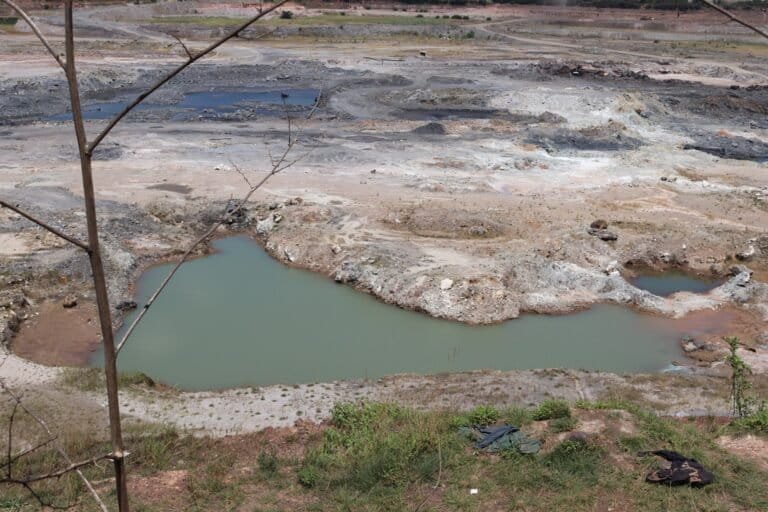
Ultimately, it all comes down to the content because uranium is considered a critical impurity in the cobalt production process. Tomas Statius, one of the co-authors of the Lighthouse Reports investigation, explains: “When you mine cobalt, you extract a lot of rock, which you then have to remove. One of the few things that’s hard to remove, unless you use a very specific step with a very precise substance, is uranium.” Strong reagents, including phosphoric acid, are needed to remove the uranium from the cobalt. Currently, this is one of only two effective methods of separating uranium from cobalt. Above all, it is the only method that complies with the maximum radioactivity threshold set by the Congolese authorities for any mining product. Exporting uranium mixed with cobalt without performing the separation process costs the exporting company very little. If it can evade inspection, it will do so. (Photo: Acids spilled in a CHEMAF mine in Lubumbashi in 2017. Source: Mongabay)
Cobalt is exported through ports equipped with scanners calibrated to detect radioactivity. If no uranium is detected in the cobalt hydroxides upon departure, two scenarios are possible: either the scanners are not properly calibrated, or customs officials failed to conduct the proper inspection, which is criminal negligence. Furthermore, the government lacks the necessary equipment for this task. The head of the General Commission for Atomic Energy (CGEA), Dr. Steve Mwanza Kamunga, told Lighthouse Reports investigators that he had requested government funds to install radiation-monitoring equipment on trucks carrying bags of hydroxides leaving the DRC for Zambia. He is still waiting.
The Government, Often Caught off Guard
This explains why the Congolese government is often caught off guard when radioactive incidents occur. For example, in November 2018, Glencore temporarily suspended its cobalt exports from the Kamoto mine after detecting uranium levels in the finished product that exceeded permitted limits. In this case, Glencore was complying with Article 404 bis of the Mining Regulations, which states that “The mining operator is responsible for radiation protection in all its activities in accordance with the law setting forth provisions relating to protection against the dangers of ionizing radiation and the physical protection of nuclear materials and facilities, and the Decree regulating protection against the dangers of ionizing radiation. The mining operator must ensure the radiation protection of its workers and take all necessary measures to prevent its mining activities from causing radiological contamination of the environment, in order to prevent the public exposure to and contamination by ionizing radiation. ”
In 2024, Botswana returned a shipment of cobalt, a product of the mining company COMMUS (Compagnie minière de Musonoï), to Lualaba because its radioactivity levels exceeded recommended standards. The government suspended COMMUS’s operations for one month and launched an investigation, the results of which were never made public. One month later, COMMUS reopened and resumed operations.
Poor Services
Once again, the Mining Regulations are clear in Article 404 bis: “The ionizing radiation regulatory authority conducts regulatory monitoring of radioactivity during the exploration, mining, processing, and transport of ores. In the event of obstruction of this monitoring, the ionizing radiation regulatory authority refers the matter to the Directorate of Mining Environmental Protection, which issues a formal notice to the noncompliant license holder.”
But on the ground, government agencies are ineffective. “All the security forces responsible for monitoring this mining site have failed in their mission,” said Paul Kisimba, a human rights and civil society activist from Likasi, a city located 30 kilometers from the mine. “This includes members of the FARDC (Congolese Armed Forces), the police, and even Gécamines’ industrial security guards, who are supposed to enforce the measure,” he added. (Source: TV5 Monde, August 2025).
According to several experts, some of the uranium naturally present in certain ores can end up in the tailings produced during processing. The mining of copper and cobalt generates large volumes of waste. The storage, monitoring, and management of this waste already pose a significant environmental challenge. And Artisanal miners rummage through them all day long despite all the risks. Do officials understand the flow of radioactive materials throughout the copper and cobalt industrial chain? There is notable negligence in monitoring radiation protection in mining environments, and the government must act. But who is responsible for monitoring mining sites for ionizing radiation?
Conflict of Jurisdiction
In accordance with the DRC’s commitments under the Treaty on the Non-Proliferation of Nuclear Weapons, the Additional Protocol, and the safeguards agreements with the International Atomic Energy Agency (IAEA), the Deputy Ministers of Finance and Mines issued an interministerial decree on July 5, 2014. This decree granted the General Commission for Atomic Energy (CGEA), in collaboration with the Kinshasa Regional Nuclear Research Center (CREN-K), the authority to monitor and assess the radioactivity of commercial mining products from extraction to export. The CGEA is also responsible for issuing radioactivity assessment certificates. However, the CGEA operates with very limited resources. Additionally, the Congo Control Office (OCC) is responsible for issuing certificates of non-radioactivity for exported commercial mining products. The OCC must also verify the product’s authenticity through appropriate analyses. Furthermore, the CGEA/CREN-K is also in dispute with the National Committee for Protection Against Ionizing Radiation (CNPRI), the nuclear regulatory authority responsible for authorizing, inspecting, and regulating nuclear activities in the DRC, and with the OCC over its prerogatives.

The lawmaker did not conflate the two. Instead, it defined the scope of each agency’s responsibilities to eliminate any confusion. The CGEA must act upstream, while the OCC must act downstream. The CNPRI’s role is equally clear. However, the situation on the ground is unclear and concerning because it ultimately does not appear that radioactive monitoring and radiation protection efforts are being carried out effectively or rigorously. So why are there so many jurisdictional conflicts? The government must apply incentives and penalties to defuse these crises, which harm its mining industry, its population, and its international image.
An IAEA Running Out of Steam
RTBF journalist Romane Bonnemé wrote in her August 21, 2026, article that the International Atomic Energy Agency is also facing serious structural and budgetary problems. “The agency has only 275 inspectors to cover all sites in the 191 countries that are parties to the NPT,” she explains. “They have an annual budget of approximately $425 million, of which about $150 million is allocated directly to monitoring safeguards agreements.”
Furthermore, the IAEA has no statutory enforcement powers. In the event of confirmed noncompliance, the agency may report it only to the UN Security Council and the General Assembly. It cannot impose sanctions, nor conduct forced inspections or apply any material coercion. These facts clearly demonstrate that the systems responsible for monitoring radioactivity and radiation protection, as well as addressing proliferation risks at the national and international levels, are flawed. So, to whom should one turn for help?
The DRC Has a Nuclear Reactor
Just before independence, the Congo acquired the TRICO-I nuclear reactor, a 50-kW research facility—the very first of its kind installed in Africa as part of the U.S. “Atoms for Peace” program. In 1970, the Trico Center became the Kinshasa Regional Center for Nuclear Studies (CREN-K), equipped with a biotechnology and molecular biology laboratory.
It quickly decided to build a more powerful research reactor, the Trico II. With a power output of 1 MW, it was inaugurated in 1972 but ceased operations in 2004. The goal was not to revive uranium mining, but rather to conduct medical, biological, genetic, and industrial research; provide education; and produce medical and agricultural isotopes—in short, to develop peaceful uses of nuclear energy. The authority responsible for managing the nuclear reactor is the General Commission for Atomic Energy of the DRC.
Despite its roots in nuclear research, CREN-K operates primarily as a scientific and technical institution dedicated to development, security, and the practical needs of society.
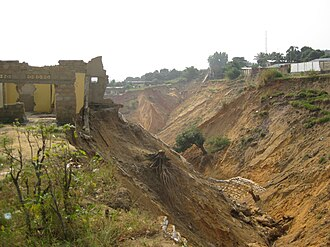
CREN-K Director Vincent Lukanda told AFP in 2017 that the amount of uranium or fissile waste stored at the center is a “state secret,” conceding only that “it is very dangerous.” In 2007, uranium rods were stolen from the facility, sparking concern among the international community about their possible diversion for military purposes. Furthermore, the reactor is located on an eroded hillside, which poses a risk of landslides that concern university authorities—a well-founded concern because, if the hillside gives way, it is unclear how much fissile waste would spill into the environment and harm the surrounding population. The IAEA regularly inspects the site to monitor the quantity of stored uranium and fissile waste.
(Photo: Erosion in the Mama Mobutu neighborhood in the Mont Ngafula commune near UNIKIN. Source: Wikipedia)
The Pandora Box
The question now is: what does the Congo plan to do with its uranium? Its large deposit remains off-limits, but uranium-bearing veins are scattered throughout the country, along with monazite, as in the Kivu provinces. Uranium is used in nuclear power, of course, but it also has applications in medicine, agriculture, water management, electricity, and many other fields. Uranium is an ambivalent substance, a characteristic of natural resources. That’s why I compare it to Pandora’s box. According to Greek mythology, Pandora was the wife of Epimetheus. She broke a taboo by opening a box given to her by Zeus. The moment she opened it, a flood of misfortunes poured out into the world. She tried to close the box again, but to no avail. Like that box, which contained more than just misfortunes, It is a strategic material for the nuclear industry and a radioactive agent with potentially disastrous consequences. When uranium is mined, whether haphazardly or in a targeted manner, as was the case in 1945, populations are exposed to serious risks, including radiation, contamination, and death.

Like the evils released from Pandora’s box, these dangers can spread far and wide, resulting in lasting repercussions around the globe. However, uranium itself is not a risk factor. The major challenge lies in optimizing its use. Depending on how it is managed, a natural resource can be a driver of development or a source of decline. Risk is not inevitable; rather, it is the result of the strategic choices that stakeholders make regarding its use.
Just as hope remained at the bottom of Pandora’s box, a positive outcome is still possible for Congolese uranium. With caution, strict regulations, good governance, and responsible management, this mineral resource can be utilized for the greater good. In this way, Congolese uranium resembles Pandora’s box: when managed properly, it leaves room for hope; when mismanaged, it unleashes invisible evils; and when buried, it seems to hold promise.
References
- www. aiea.org
- Elaine Davenport, Paul Eddy et Peter Gillman, The Plumbat Affair, Philadelphie, Futura Publication Ltd, 1978
- www.sfeb.org
- www.fr.mongabay,com
- Kaniki, A. (2026). Évaluation de la qualité des eaux et des sols dans les communautés impactées par les entreprises minières TFM, COMMUS et MUMI. Rapport réalisé à la demande de Afrewatch et RAID, Université de Lubumbashi/Laboratoire d’Analyses Environnementales, juin 2026. URL : https://raid-uk.org/wp-content/uploads/2026/06/Prof-Kaniki-Rapport-JUIN-2026-1.pdf
- Tomas Statius Sébastien Philippe, Ryan Manzuk, Peter Aldhous, Sam Joiner, Leslie Hook, Camilla Hodgson, Crofton Black, Daniel Howden, Chris Campbell, Peter Andringa, Congo’s Hidden Uranium Exports, Co-publié avec Financial Times Nature, 30 juillet 2026
- Comment l’uranium congolais transite vers la Chine sous les radars par Tomas Statius (Lighthouse Reports) et Ryan Manzuk (chercheur à l’université de Princeton), 30 juillet 2026, modifié le 31 juillet 2026, Le Monde
- Susan Williams, Spies in the Congo, America’s Atomic Mission in World War II, Hurst Publishers, 2016, 432 pages
- Romane Bonnemé, L’uranium fantôme de la République démocratique du Congo : une filière secrète vers la Chine, à l’heure du grand retour du nucléaire, RTBF, 21 août 2026 à Bruxelles
- www.tv5monde.com, reportage de Juliette Ossola avec AFP, 9 août 2025
- www.world-nuclear.org
- www.worldpopulationreview.com