Lithium—The Savior
For centuries, people with mental health conditions have been stigmatized by society. This continues to be the case today. Although attitudes are beginning to change, anxiety, depression, and bipolar disorder remain taboo subjects in many societies. However, the scientific community has never stood idly by. It is essential to not only help destigmatize these conditions but also to seek cures. For example, in 1944, D.K. Henderson and R.D. Gillepsie reported in their Textbook of Psychiatry (p. 3) that certain waters in the British Isles provided significant relief to people with manic disorders. The efficacy of these waters was real and directly proportional to their lithium content.
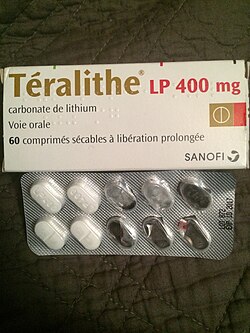
Since the early 20th century, research has demonstrated that lithium carbonate and/or lithium citrate supplements are an effective treatment for manic or hypomanic states and for preventing depressive or manic relapses in bipolar disorder and intermittent schizoaffective states.
An Effective Medication for Bipolar Disorders
In fact, the anti-manic properties of lithium were first demonstrated in 1949 by Australian psychiatrist John Cade. While studying patients’ urine and working with experimental models, Cade observed that lithium significantly calmed patients experiencing mania. Cade showed that lithium could protect neurons from stress and degeneration, reduce inflammatory processes in the brain, promote cellular repair, and prevent the buildup of abnormal proteins associated with these conditions. This represented a major breakthrough in psychiatry, establishing lithium as the standard of care for treating manic-depressive psychosis, also known as bipolar disorder.
A Promising Supplement for Alzheimer’s and Parkinson’s
Thomas Guttuso Jr., an American neurologist, suggests that lithium supplementation could slow or prevent the onset of Alzheimer’s and Parkinson’s diseases. Lithium has the potential to prevent some neurodegeneration, slow the progression of these diseases, and preserve cognitive and motor function for a longer period of time. “For Alzheimer’s and Parkinson’s, lithium shows promise as a neuroprotective approach, but it has not been proven to the point of being a standard-of-care treatment,” writes Dr. Guttuso.
However, German molecular geneticist Dr. Michael Nehls asserts in his book published in 2025 The Conspiracy Against Lithium: The Suppressed Essential Nutrient and Its Benefits for Mental Health, that lithium is the antidote to Alzheimer’s disease. He demonstrates how lithium deficiency can lead to depression, Alzheimer’s disease, aggression, suicide, and the breakdown of society, even though this element is banned or restricted as a dietary supplement in much of the world.
What is lithium?
The term “lithium” comes from the Greek word lithos, meaning “stone.” Swedish chemist Johan August Arfwedson first identified it in 1817 while analyzing a rock called petalite. Its chemical symbol is Li. Lithium is the lightest metal on Earth. With a density of 0.534, it is less dense than water. It has an atomic number of three (3), making it the third element in the periodic table after hydrogen and helium. This position makes lithium the smallest solid atom on Earth. “It oxidizes easily; as a result, it does not exist in its native state” (Mupepele, p. 139).
Despite being the lightest metal, lithium has the highest electrochemical potential and offers the greatest specific energy per unit weight. However, because metallic lithium is unstable, especially during charging, researchers turned to a nonmetallic solution using lithium ions. John Goodenough of the United States, Stanley Whittingham of the United Kingdom, and Akira Yoshino of Japan invented the lithium-ion battery used in smartphones and electric cars. In 2018, they were awarded the Nobel Prize in Chemistry.
Lithium Extraction
Lithium occurs naturally in hard rock deposits or salt lakes (salares). Therefore, it is extracted primarily from these two natural sources.
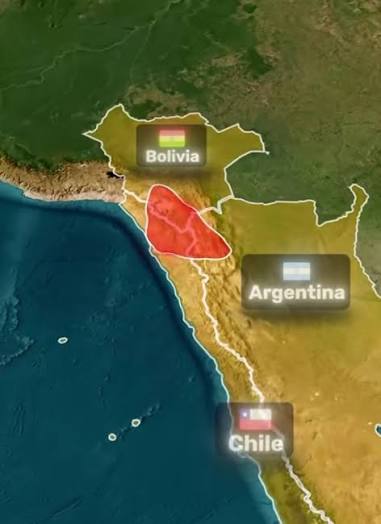 Brines from inland salt lakes, primarily in the region known as the “lithium triangle” (comprising Argentina, Bolivia, and Chile), are among the world’s largest and richest lithium brine deposits, accounting for 59% of global reserves. However, the combined share of these three countries’ production remains small. Bolivia, which ranks among countries with significant lithium reserves, has a low profile in this regard. The brine method is cheaper but slower, requiring 12–18 months of evaporation and producing lower-purity lithium. In this state, lithium is dissolved in the form of lithium chloride.
- Granitic rocks called pegmatites are where minerals such as spodumene, petalite, and lepidolite are found. Australia is home to the world’s largest hard-rock lithium mine. Extracting lithium from spodumene is a complex yet essential process. Spodumene allows for a quicker response to the rapidly growing demand for electric vehicle batteries. According to current estimates, rock-based sources account for approximately 60% of global lithium production, while brines account for about 30%. The remaining 10% comes from other sources.
Global Lithium Production
Commercial lithium production began in 1923 with the German firm Metallgesellschaft AG, which used electrolysis to separate lithium from a mixture of molten lithium and potassium chlorides. Initially, only 6% of global lithium production was used in batteries, but this figure has since risen to 35%. According to the United States Geological Survey (USGS), global lithium production increased by 31% by 2025, rising from 222,000 to approximately 290,000 metric tons. This increase was in response to strong demand from the lithium-ion battery market, as well as high lithium prices between 2021 and early 2023 and increased global production capacity. Global lithium consumption in 2025 was estimated at 263,000 tons, a 20% increase from the 220,000 tons consumed in 2024. Fears of a short-term lithium supply glut kept prices low during the first half of 2025. However, rapid growth in electric vehicle sales in China and Europe, along with increased demand for battery energy storage systems, contributed to rising lithium prices during the second half of the year.” (USGS – Mineral Commodity Summaries 2026, p. 122).
According to this report, Australia remains the world’s leading producer of lithium in 2025.
| Country | Reserves/metric tons | Production/metric tons/2025 |
| Australia | 10,000,000 | 92,000 |
| China | 10,000,000 | 62,000 |
| Chile | 13,000,000 | 56,000 |
| Zimbabwe | 860,000 | 28,000 |
| Brazil | 1,400,000 | 12,000 |
| Mali | 1,200,000 | 9,800 |
Nigeria has just entered the fray by commissioning West Africa’s largest lithium processing plant, which has a capacity of 6,000 metric tons per day and is located in Nasawara State. This development marks a significant step forward in Nigeria’s efforts to transition from exporting raw minerals to domestic processing and industrial exploitation.
And what about the DRC?
One might ask! All lithium-related activity in the DRC takes place in the town or territory of Manono. It is a potential El Dorado, but it is mired in poverty.
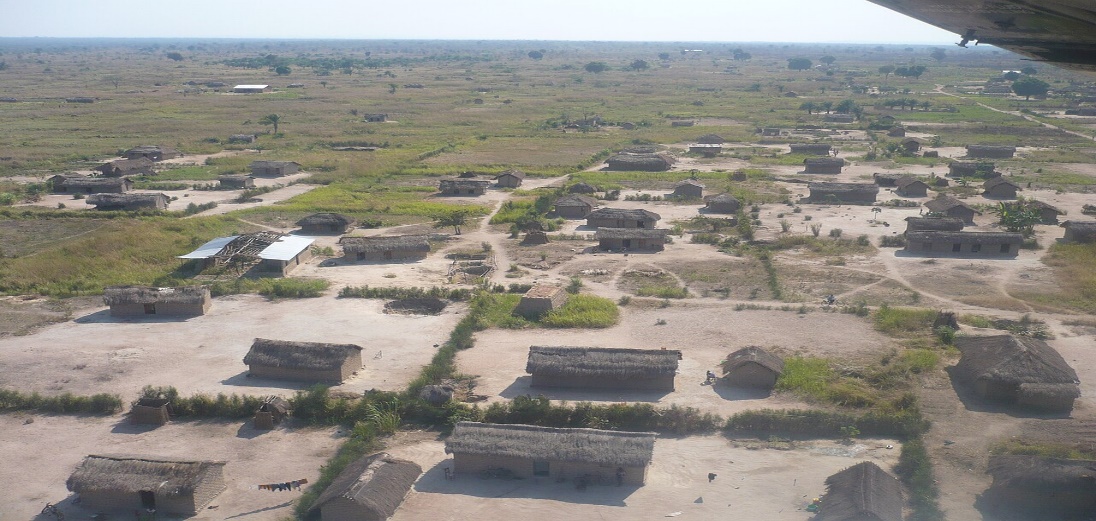
Aerial view of Manono – Photo by Tom Skrinar
While Americans produce reality TV shows featuring their celebrities, the people of the Democratic Republic of the Congo experience daily soap operas centered on their country’s main source of foreign exchange: minerals. According to the U.S. Geological Survey (USGS), the Democratic Republic of the Congo (DRC) has three million tons of measured and indicated lithium resources concentrated in Tanganyika Province, primarily in Manono City and its surrounding territory. This deposit is one of the largest undeveloped lithium deposits in the world.
But what a tragedy surrounds this mineral, which should already be generating millions for the Republic yet has been subject to unspeakable delays where nothing can be explained legally, only politically, between these companies: Cominière (Congolaise d’Exploitation Minière), a state-owned enterprise; Dathomir, owned by Simon Kong, the original shareholder who sold his shares to the Australian company AVZ Minerals; and Green Lithium Holdings, an investment company established by AVZ Minerals for the project. Dathcom Mining, the mining operator that conducted exploration at the site from 2017 to 2021, obtained mining permit 13359 in April 2022, which was revoked in November of the same year.
It was a wild saga that took all these shareholders to the International Court of Arbitration of the International Chamber of Commerce and the International Centre for the Settlement of Investment Disputes (ICSID), as well as to the High Court of Kalémie and the Commercial Court of Lubumbashi—sometimes without one of the parties even realizing it. Go figure! Investigations conducted by the General Inspectorate of Finance (IGF) in 2022–23 revealed unprecedented irregularities in all transactions related to this lithium deposit. This tangled mess dragged on for years, delaying the extraction of Congolese lithium, which the world truly needs today.  Now that the dust has settled, the Zijin Mining Group (listed on the Hong Kong and Shanghai stock exchanges) through its joint venture Manono Lithium (to which Cominière had sold 15% of its 25% stake in AVZ at a bargain price, thereby disregarding AVZ’s right of first refusal) has announced that it is preparing to begin extracting lithium carbonate in the DRC in June. Manono Lithium acquired 15% of Cominière’s 25% stake in AVZ at a bargain price, disregarding AVZ’s right of first refusal. The extraction will take place on the same PE13359 in the northern part of the deposit (125 mining blocks), while the southern part (96 mining blocks) is reserved for AVZ. AVZ prevailed in the CCI and is still fighting for the return of its permit..
Another major player has entered the fray: Kobold Metals, a U.S. company backed by Bill Gates and Jeff Bezos, which obtained permission from the Congolese government in 2025 to acquire and develop the Roche Dure lithium deposit in Manono. According to AVZ, this deposit contains four hundred million metric tons of mineral resources. In light of the dispute between AVZ, Zijin and Cominière (the Congolese government’s representative), Kobold proposed resolving the impasse by purchasing a portion of the project and compensating AVZ for a portion of the value of its permit. AVZ Minerals has therefore decided to temporarily suspend the arbitration proceedings it initiated against the Democratic Republic of the Congo before ICSID.
Zoom-éco DRC reported in one of its editions that “On 7 May 2025, AVZ and the US company KoBold Metals concluded a framework agreement. This agreement provides for fair compensation in exchange for the transfer of AVZ’s shares, as well as the suspension of the ICSID proceedings. The arbitral tribunal approved this decision, which is now official, ‘in accordance with the parties’ agreement.”
In April 2026, KoBold Metals, a company that specializes in using artificial intelligence for mining exploration and operations, announced the launch of the largest lithium exploration campaign in history. This large-scale, technology-driven program covers thirteen exploration permits in the Democratic Republic of the Congo (DRC). Benjamin Katabuka, the CEO of KoBold Metals-DRC, stated: “KoBold DRC has the tools and the mandate needed to achieve this. What we are building here is a model that illustrates how American technology and Congolese talent can come together to create something the world needs.” (Reuters, April 13, 2026)
According to the last-minute information we received, Manono Lithium exported 10,000 tons of lithium concentrates this month. We aren’t going into this detail, as it seems the entire process is quite unclear. Therefore, the Democratic Republic of the Congo will have to wait a few more years before the national treasury and the communities of Tanganyika see the benefits of lithium.
Lithium in Batteries
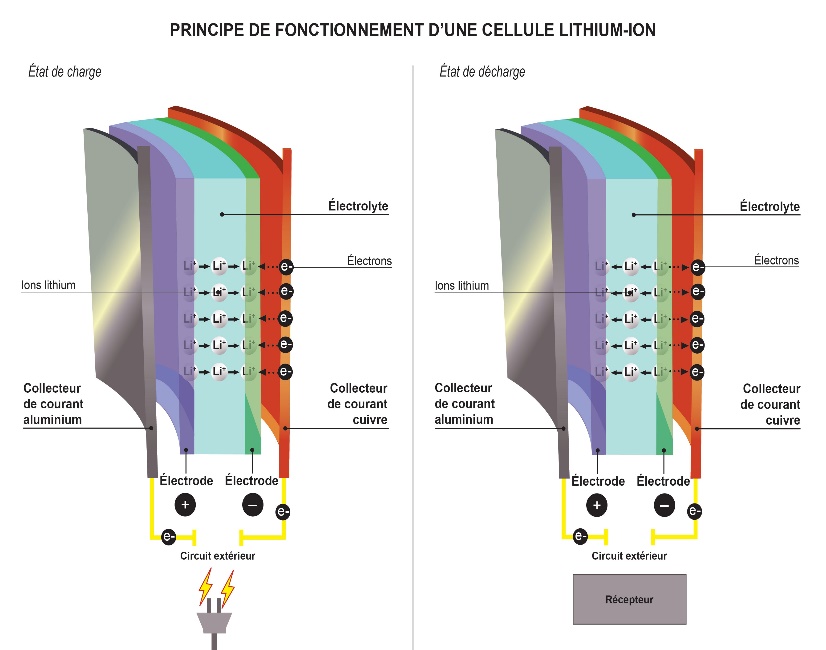
Lithium, a highly reactive metal, is considered the “white oil” of the renewable energy era. It is essential to the energy transition. Lithium hydroxide, which is produced through a chemical reaction involving lithium carbonate and calcium hydroxide, is used in batteries for electric vehicles and cell phones. Lithium-ion batteries can store three to four times more energy per unit of mass than other battery technologies can. A smartphone battery contains two to three grams of lithium, a computer battery contains thirty grams, and a vehicle battery requires more than twenty kilograms.
As for how it works, when the battery is charging, lithium ions (Li+) leave the positive electrode (the cathode) and are stored in the negative electrode (the anode). When the battery discharges, or produces an electric current, the Li+ ions move in the opposite direction.
Additionally, it improves the durability, corrosion resistance, and heat resistance of glass products, including those used in glass-ceramic cooktops, glassware, specialty glass products, and fiberglass. These properties enhance productivity and reduce energy consumption during the glass manufacturing process.
As cobalt is reduced in electric vehicle batteries, lithium remains the metal of choice for most manufacturers, including Chinese giant BYD. Tesla, CATL, and many others have followed suit.
Global Lithium Use in 2024 (Natural Resources Canada)
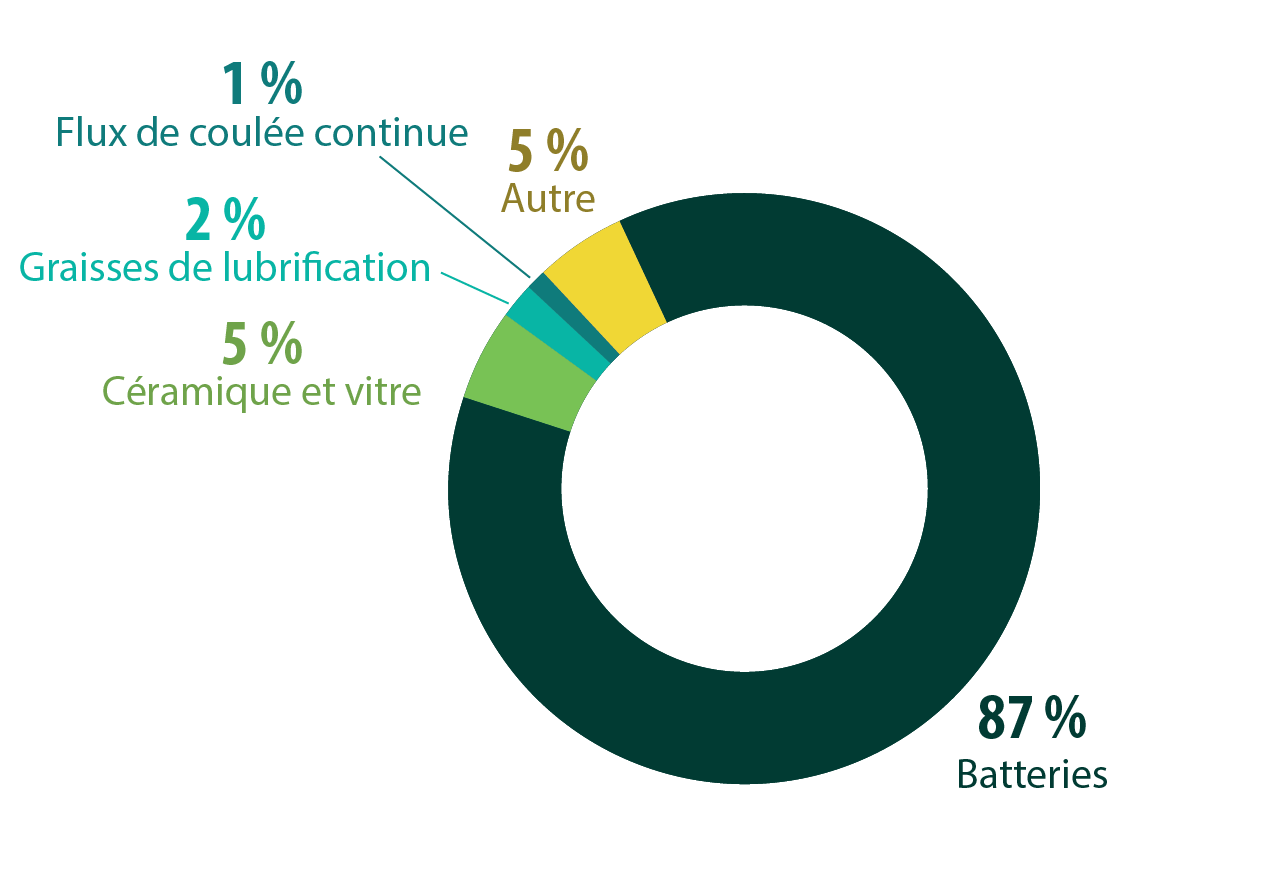
Finally, lithium saves lives by treating mental health disorders and helps humanity reach a zero-emissions planet. It remains the dominant material used to manufacture batteries for electric vehicles and is expected to remain so throughout the coming decade. No competing technology currently rivals its combination of performance, production scale, and commercial acceptance. The electrification of transportation, industry, and energy systems continues to require enormous quantities of lithium. Demand growth remains strong. (Source: Juan Ignacio Guzmán, CEO of GEM Mining Consulting, June 9, 2026, mining.com)
China is still the leader in the lithium market, even though it doesn’t have as much lithium as the other countries in the “lithium triangle.” The industry gets government subsidies, of course. But China’s economy is growing more slowly. People aren’t buying much at home, and the war in Iran is lowering oil prices. Because of this, the country is not making as much money from selling goods to other countries as it used to. This is clear in the first complete GDP data for a full quarter since the war in Iran began on February 28. “This is the weakest growth we’ve seen since late 2022”, China’s National Bureau of Statistics said in a press release. It stated that there are more things outside of China causing instability and uncertainty and there are more products than people can buy in the country.
Because of this, China is getting ready to stop giving subsidies to car companies. What will happen to lithium? Only time will tell.
References
- Walter A. Brown, *Lithium: A Doctor, a Drug, and a Breakthrough*, Liveright, New York, 2019, 234 pages
- D.K. Henderson and R.D. Gillespie, *Textbook of Psychiatry* (Sixth Edition), Oxford University Press, London, 1944
- John F. J. Cade, M.D., “Lithium Salt in the Treatment of Psychotic Excitement,” The Medical Journal of Australia, Sydney, September 3, 1949, Vol. II,36thYear
- https://www.bbc.com/afrique/articles/ckg2edx2mjpo
- Wenfei Ding a, Chenglei Ru a, Lan Xu ab , “Recent progress in electrospun nanofiber separators for advanced lithium-ion batteries,” Journal of Energy Storage, Volume 102, Part B, November 20, 2024, Page 114200
- www.mining.com
- Thomas Guttuso Jr., The Promise of Lithium: How an Over-the-Counter Supplement May Prevent and Slow Alzheimer’s and Parkinson’s Disease, Lioncrest Publishing, USA, 2023, 168 pages.
- Léonide Mupepele, Monti, The Congolese Mining Industry—Figures and Challenges, Volume 1, L’Harmattan DRC, Paris, 2013
- U.S. Geological Survey, Mineral Commodity Summaries, February 2026
- https://www.benchmarkminerals.com/lp/lithium-service
Note: Although we strive to provide accurate information, we acknowledge that our articles may contain errors. If you spot an error, please report it to us in the “Comments” section.