
EV Battery Outlook 2026: the Future of Electromobility – December 25
EV Battery Outlook 2026: the Future of Electromobility | ||
As 2025 wraps up, many believe that electric vehicles (EVs) are accelerating the shift to sustainable transport, slashing emissions and revitalizing urban air quality. Yet, debates rage over battery sustainability, from acquiring raw materials to recycling. At the heart of it all? Battery chemistry—dictating range, safety, cost, and lifespan. Automakers are strategically deploying different technologies, mixing and matching tech for diverse needs, proving there’s no single “best” battery. Here’s a snapshot of today’s frontrunners against all odds and what’s charging ahead by 2026, spotlighting smart innovations over silver-bullet solutions. | ||
Cutting-edge Battery Tech Driving EVs
| ||
Critical Challenges & The Cobalt Conundrum The EV battery boom faces supply chain turbulence: lithium, nickel, cobalt, and graphite are geopolitically vulnerable, spiking prices and risks. Add environmental scrutiny, and the push is on for cobalt-free options and robust recycling. Infrastructure lags in some areas, while myths about range anxiety and fires erode trust. But with targeted investments and clear communication, industry leaders can electrify adoption. | ||
Trends Shaping 2026 and Sparking Opportunity Batteries are splitting paths: LFP for mass-market affordability and safety, high-nickel NMC/NCA for luxury range. Recycling is exploding as EV sales soar and regulations tighten—think lithium and cobalt recovery. Thanks to recycling, domestic production surges to cut imports, while breakthroughs like solid-state batteries and silicon anodes promise game-changing efficiency. Early movers in these spaces? They’re primed for massive gains. | ||
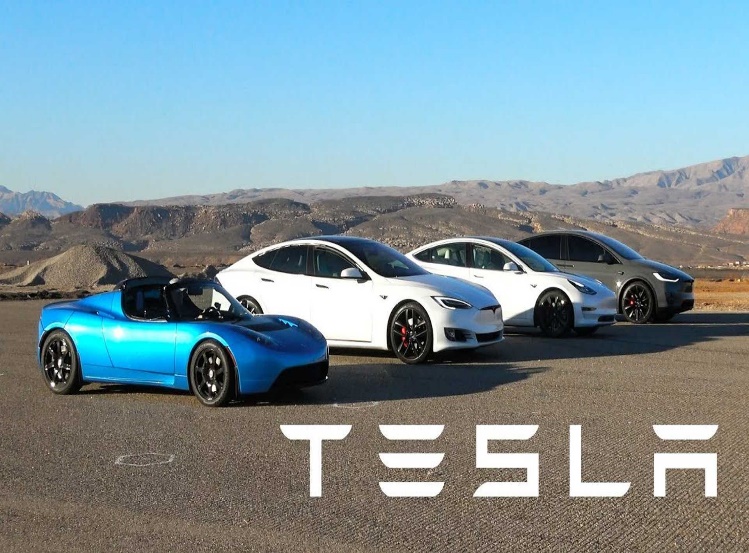
Tesla fleet/ Charroi Tesla (Source: Tesla) | ||
Policy Reality Check Aiming for net-zero, Western countries seek to phase out gas and diesel by 2035, pushing all-electric futures. But rollout’s rocky: Citing a need for flexibility, a revised plan now allows 10% of new sales to be hybrids, provided manufacturers purchase carbon offsets. The EU is slowing down now by allowing 10% hybrids with offsets for flexibility. However, Norway leads with 90% EV sales, but Canada delayed its zero-emission push until further notice, and the U.S. has rolled back its “EV mandates” to ease automaker burdens. That policy’s success hinges on adaptive policies. | ||
The DRC Factor The Democratic Republic of Congo reigns supreme in critical minerals with close to 70% of global cobalt reserves, plus copper, nickel, and lithium riches etc.. without forgetting its vast untapped prospective reserves of iron in Province Orientale, nickel in Kasaï central, phosphate mainly in Bas-Congo. It’s the linchpin for EV transitions, but political instability, corruption, and questionable business climate threaten its edge. Its future as a green energy cornerstone depends on stability and robust governance, as the industry urgently seeks alternatives. Predictable policies and reforms are urgent to harness this potential ethically, especially as cobalt-free LFP tech gains ground ((even though it is classified as a strategic mineral in DRC). | ||
2025 Market Leaders Asia Pacific commands close to 52% of EV battery revenue, thanks to China’s manufacturing might, Korea’s tech edge, and Japan’s integration. Europe charges forward with strong regulations and gigafactory investments; North America ramps up via incentives and supply-chain localization. South America and Middle East/Africa leverage raw resources for refining growth. | ||
Bottom Line
| ||
References
| ||
If you are already familiar with this topic, please let us know if we have overlooked any significant issues that are on the horizon or that have had an impact in the past. Si vous connaissez déjà ce sujet, veuillez nous signaler tout problème important que nous aurions omis et qui pourrait se présenter à l’avenir ou qui aurait eu un impact dans le passé. | ||
Contact : Margaret Rashidi Kabamba Translator & Writer +1 647 767 8621 +243 83 292 5377 | ||