
Copper, the Staple – March 26
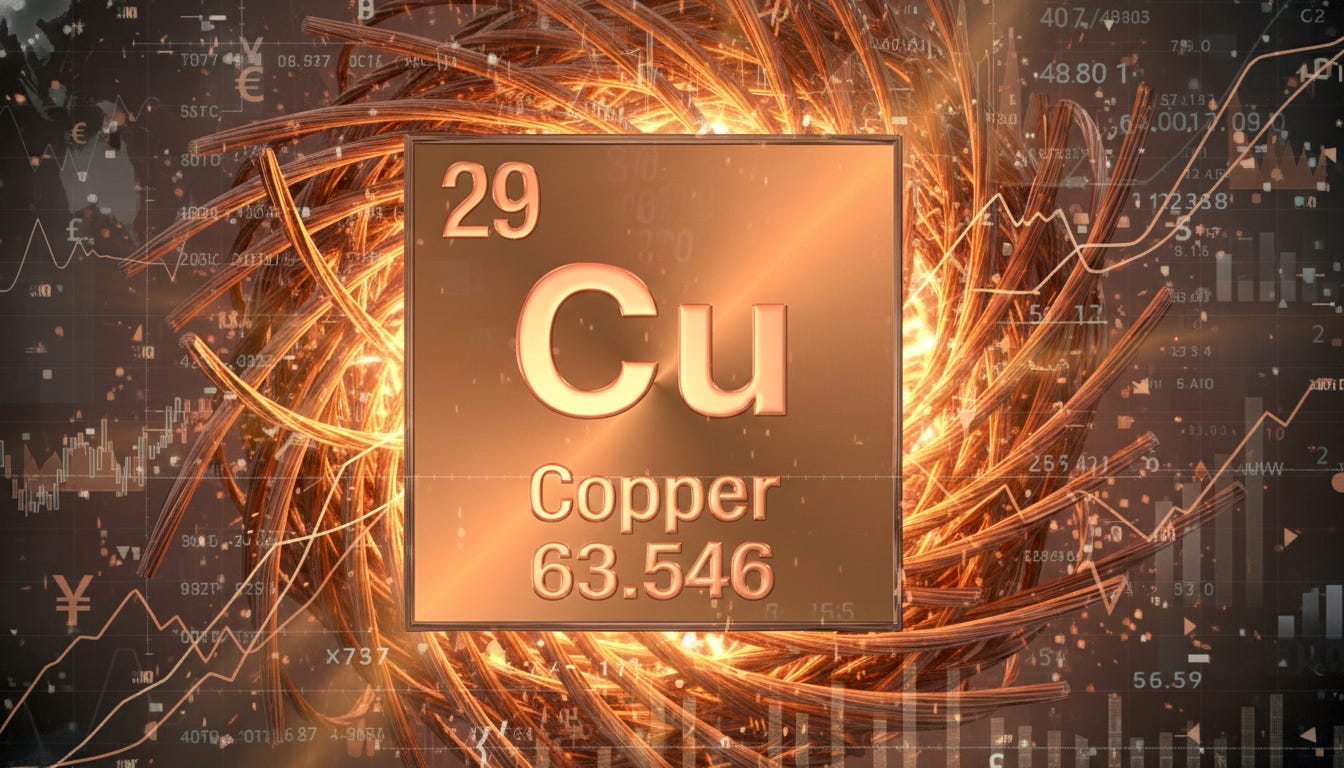 Along with gold, copper is the oldest metal in the world with at least 10,000 years of existence. It is true that violence does not feature in its list of achievements, but since the dawn of time, it has always been used to make weapons of death, as well as jewelry and coins. The Greeks and the Romans imported it from Cyprus (the island of a thousand mines); the former called it cyprium and the latter, aes cuprum, the ore of the island of Cyprus. The name evolved from Latin to “copper” in French and its Cu symbol comes directly from Latin.
Take a break before diving into this article and ask yourself: What did you eat or snack on today? Fruit? Vegetables? What did you drink? Water? Wine? Everything I mention here contains copper.
Olivares tells us that “In infants aged 0 to 12 months who are exclusively breastfed, the total daily copper intake ranges from 0.1 to 0.3 mg/day; breast milk contains approximately 0.2–0.3 mg/L of easily absorbable copper. ” (Cal EPA, 2008; Olivares et al., 1998)
Copper enters tap water through runoff from agricultural land into the rivers and streams from which drinking water is drawn. In Pharaonic Egypt, copper was used to treat infections and sterilize water. Scientific research tells us that natural foods such as grains, meat, and most fish contain copper. They contain enough copper to provide up to 50% of the recommended daily intake as part of a balanced diet.
In the right amounts, copper is essential for health.
In fact, the body needs it to form and maintain organic tissues and bones. Copper helps transport oxygen throughout the body, aids in blood clotting, and even plays a role in hair color (pigmentation). It is important for cardiovascular health and hormonal balance. It supports the immune system. The body uses copper to produce enzymes that protect cells from free radicals. A copper deficiency can lead to mental disorders, deterioration of the nervous system, and brittle bones. However, it is rare that we do not get enough copper. The risk is that we get too much.
Copper seems essential to our health. It is an excellent conductor of heat and electricity while being corrosion-resistant and possessing antimicrobial properties. Without copper, we would be living in complete darkness. Copper is an essential component of electrical systems, military vehicles, and data centers dedicated to artificial intelligence.
Finally, this is one of the wonders of copper: it is infinitely recyclable. It can be reused indefinitely without losing its original form! It is also biostatic, meaning bacteria cannot grow on it!
The level of demand for copper serves as a barometer of global economic health, which is why some people call it “Dr. Copper.”
Where does copper come from?
Copper is found in deposits formed on the earth’s surface as a result of early volcanic disturbances. There are two types of copper ores due to the chemical differences in the ore and their proximity to the earth’s surface: copper oxide (closer to the surface) and copper sulfide (buried deep in the earth). Oxide ores are formed when weather conditions and other natural forces changed to ancient rocks. Copper oxides are considered low-grade ore, usually with a lower concentration of copper. Sulphide ores are formed when molten solutions flowed into the Earth’s crust. Copper sulphides are less abundant, but they contain higher amounts of copper. Sulphide ores and oxidized ores are mined and processed to extract metallic copper.
Before mining can begin, a mineral deposit must first be located through exploration. However, a mineral deposit alone is not enough to justify mining. Some deposits are inaccessible, too complicated, or have ore grades too low for mining. Once a deposit has been discovered, drilling, analysis and technical studies are conducted to determine whether it should be developed.
Mining companies must consider numerous factors, including environmental concerns, safety measures, political conditions, geological factors, transportation logistics, and extraction and processing techniques. This process usually takes several years. Once the decision is made, mining can begin.
Copper Mining and Processing
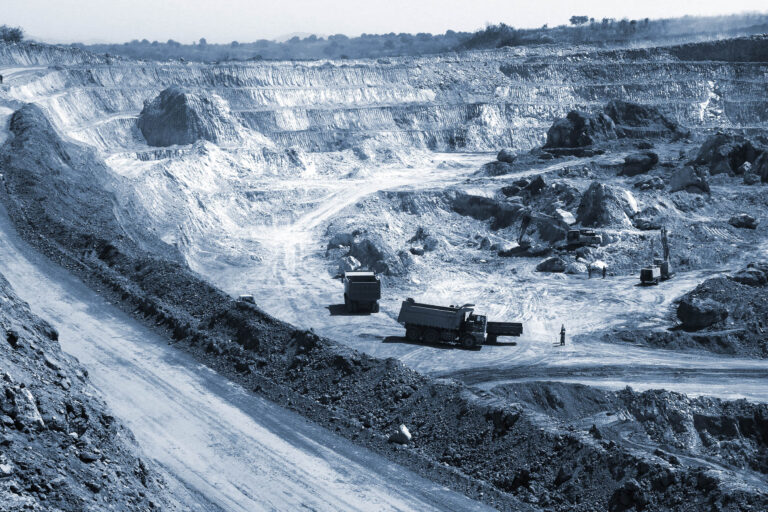
The first steps in copper processing are the same for both ores: extraction and transportation. Ore mining (rock containing valuable metallic minerals) is usually done in the open pit (image of KCC’s open pit mine in Kolwezi) for shallow deposits and in the underground mine, for (image of Kipushi underground mine) deep deposits.
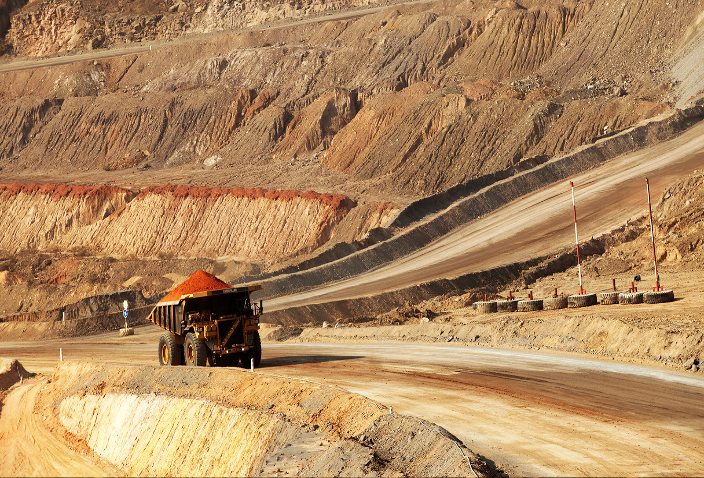
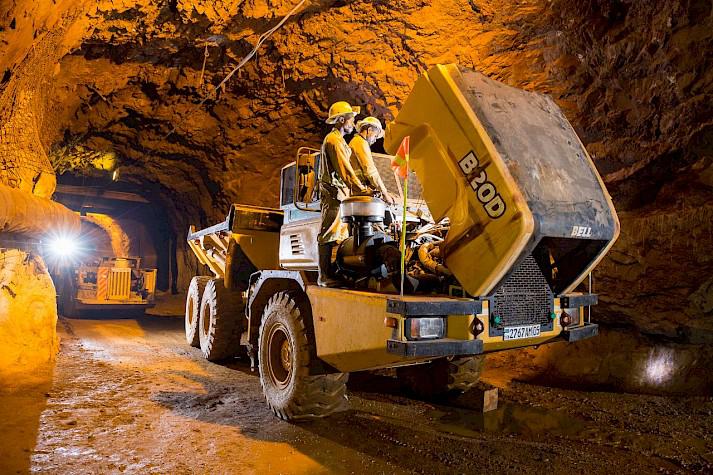
Once the ores have been extracted, they are crushed and ground, and thus the processing begins.
Currently, there are two main methods of extracting and processing copper – concentration & smelting using pyrometallurgy (deriving from the Greek word pyro meaning fire) and leaching & SX/EW using hydrometallurgy (deriving from the Greek word hydro meaning water).
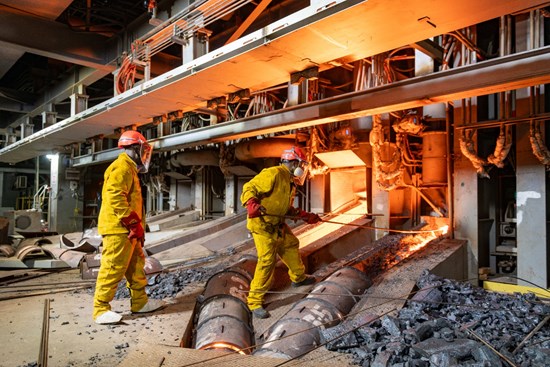 Pyrometallurgy is the process of extracting and purifying metals by applying heat. The extraction and purification of copper from copper sulphide ores involves four fundamental steps: 1) foam flotation, 2) thickening, 3) smelting, and 4) electrolysis. The finished copper cathodes can then be processed into copper wires, plates, tubes, and other products. Inside the smelter (Photo of the Kamoa smelter in Kolwezi), a furnace melts the copper ore at 1,260 °C, turning it into a lava-like liquid. This molten metal is then poured into molds to produce 340 kg ingots called anodes, which are shipped to a refinery.
In hydrometallurgy, aqueous (water-based) solutions are used to extract and purify copper from oxide ores at room temperatures. The process usually involves three steps: leaching, solvent extraction, and electrolysis (SX/EW). During leaching, crushed ore is mixed with sulphuric acid to dissolve the copper it contains. The resulting ‘rich’ metalliferous solution, consisting of sulphuric acid and copper sulphate, is collected, with the copper compound present at concentrations between 60 and 70%.
The second step is to separate and purify the metals contained within a liquid mixture using a different liquid. In the mining sector, this process is known as solvent extraction (SX). The mixture is combined with a special organic liquid (“the solvent”) that attracts the metal but not the other components. The metal then passes into the solvent, leaving the unwanted materials behind. The two liquids are then separated in a specific way to ensure they do not mix, just like oil and water. Finally, the metal is extracted from the solvent in a purer form.
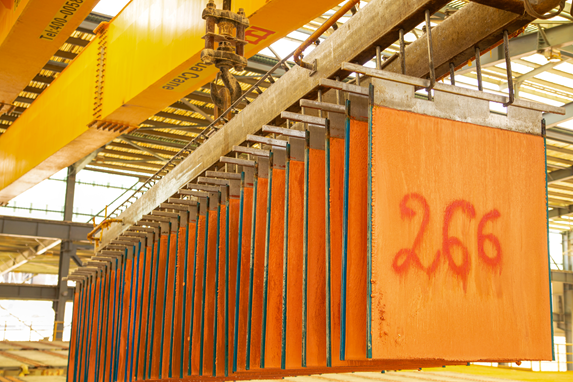 The final step is electroextraction (EW), which is a type of electrolysis. An electric current passes through an inert anode (the positive electrode) and the copper solution from the previous step, which acts as an electrolyte. The positively charged copper ions (called cations) leave the solution and settle on the cathode, forming 99.99% pure copper.
(Copper cathodes at Tenke Fungurume Mining in Lualaba).
In summary, here is the diagram of copper production
Oxide Ore: Hydrometallurgy
Heap Leaching
Solvent Extraction
Electrowinning
Mining
Transporting
Primary Crushing
Sulfide Ore: Pyrometallurgy
Froth Floatation
Thickening
Smelting
Electrolysis
Final Product:
99.99% pure copper cathode
Copper rod
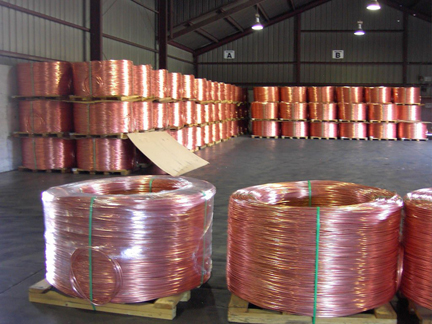 Much of the copper produced in both the concentration and SX/EW processes is fed to the bar mill. There, copper is melted and cast into ingots. The bar is then taken to the rolling mill, where it is reduced in size to that of a pencil. It then passes through a cleaning solution and is rinsed and coated with wax to protect it from oxidation, i.e. the reaction of the metal in contact with oxygen. Once coated, the copper is wound into a coil, compacted, strapped and weighed for shipment.
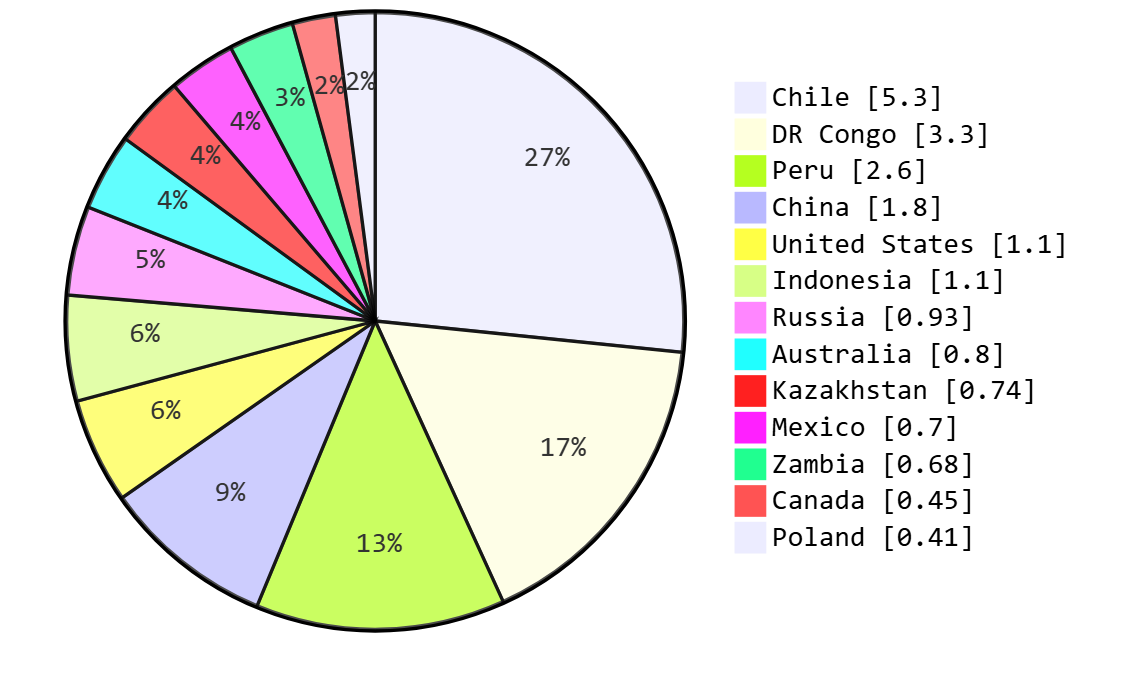
The world’s major copper producers (2024-2026 data)
Copper Major Challenges
Those working in the mining industry are well aware that it is subject to a boom-and-bust cycle. The emergence of new technologies and electromobility has led to strong demand for certain metals, including copper and cobalt. Both of these metals are included on the list of critical minerals in countries such as the United States. Copper is a highly conductive metal that is also highly resistant to corrosion, making it very important in modern energy systems. As the world enters the age of electricity, copper is set to play a vital role, much as it did in the Bronze Age when copper was alloyed with tin. Demand for copper is increasing across several sectors, including power grids, electric vehicles, buildings, industry and data centers. Consequently, copper prices have reached record highs this year.
Growing demand and soaring prices
From 1990, when a ton of copper sold for USD 2,358, to 29 January 2026, when it sold for USD 14,527 — a price never before reached, and which is difficult to explain rationally, demonstrates that copper prices have reached record levels, with an average of USD 5,064 in 2017.
Since the U.S. and Israel launched strikes against Iran in late February, copper prices have fallen by almost 10%, but the outlook for stock markets remains positive. Kathleen Quirk, the CEO of Freeport-McMoRan Copper & Gold, said that although the conflict is causing market uncertainty, she expects global demand for copper to increase.
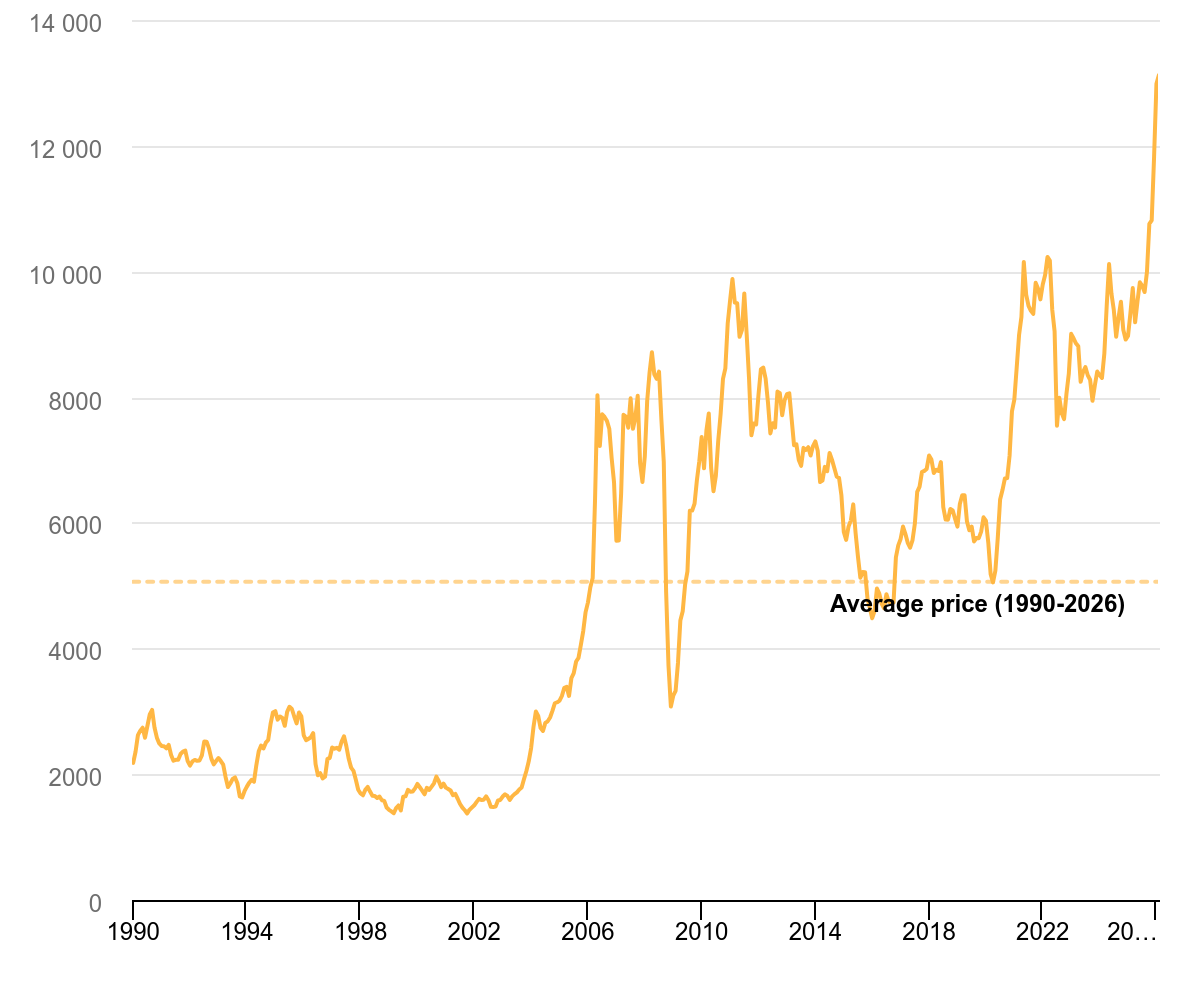
Source : IEA (2026), Copper monthly average price, 1990-2026, IEA, Paris https://www.iea.org/data-and-statistics/charts/copper-monthly-average-price-1990-2026, Licence: CC BY 4.0
“The market is pricing in some uncertainty about global economic growth, and Dr. Copper is something that affects the perception of global risk,” said Quirk on the sidelines of the CERAWeek conference hosted by S&P Global in Houston on 23 March 2026. Freeport sold its copper assets to China’s CMOC in 2016, and Quirk has admitted that his company is open to the idea of returning to the Democratic Republic of the Congo (DRC), but there is currently no obvious opportunity to do so. (Source : mining.com)
- Supply disruptions
In the short term, this surge in copper prices can be explained by supply disruptions at several major mines, as well as by a build-up of U.S. inventories last year due to uncertainty over tariffs. In the longer term, however, it is based on the challenges of opening new mines and the prospect of robust demand associated with electrification and artificial intelligence. “Global demand for copper is expected to increase by 75% to 56 million tons per year by 2050. In order to meet this demand and offset the decline in production resulting from ageing mines, around 60 new mines will need to be commissioned within the next decade alone, including the Quellaveco mine in Peru, which is owned by Anglo American,” said Duncan Wanbald, CEO of Anglo American, at the Future Minerals Forum (FM), an innovative tool designed to measure and track the progress of critical value chain developments in supplier countries.
Lower interest rates, a weak dollar, increased interest in physical assets, and strong financial speculation have also put upward pressure on copper prices.
- Scarcity of massive capital
A company needs substantial capital and must meet many other important prerequisites to undertake large-scale mining. Currently, no new copper mines have been opened. Expansion of existing projects (brownfield sites) has increased by 65% since 2020, but the cost is approaching that typically associated with new projects (greenfield sites). Furthermore, as a copper mine is depleted, the grade of the ore decreases, doubling the investment required for processing and subsequent stages. Furthermore, there has been a rapid decline in new resource discoveries.
- A long period between the discovery and development of the mine
Finally, it takes an average of 15 years for new copper projects to be implemented, from discovery to production. Many major projects have recently experienced significant delays and cost overruns. Investment in new mine expansion remains limited due to environmental, social and governance (ESG) constraints, as well as long permitting times in the relevant jurisdictions.
Furthermore, the average grade of ores at major producers continues to decline, reducing concentrate production even when extraction rates remain stable, as is the case in Chile.
DRC, Mukuba Kingdom
 The Congolese soil is full of copper deposits. In 1911, the Union Minière du Haut Katanga (which later became Gécamines) produced its first ‘mukuba‘ (copper in Swahili) by reducing fusion in water-jacket furnaces (source: www.gécamines.cd). GECAMINES SA achieved record production in 1986 with 476,000 tons of copper, 14,500 tons of cobalt, and 64,000 tons of zinc ingots, generating an annual turnover of around USD 1 billion. (Photo by Gécamines.) “The ‘Copper Eater’ is only a shadow of her former self today, the vestige of a definitively bygone era” (Benjamin Rubbens). Gécamines produced less than 10,000 tons of copper in 2024 and owes its survival to private partners. In Katanga, people are still mourning the ‘death’ of Gécamines, a victim of a harshness that is not reflected in its landscape, but which today embodies nostalgia for a bygone era. An enchanting interlude… but closed!
Things regressed rapidly in the ’90s, but thanks to the partners of this parastatal, production has resumed and now exceeds 3 million tons per year. However, it is no longer the same Gécamines as in years past. Victim of an immeasurable bloodsucker, those in power are running out of ideas to restore its image!
The government’s objective is to stabilize the market and, in the medium and long term, encourage local processing. This is an instrument of economic sovereignty that must serve the needs of the population. Currently, the entire country is not benefiting from copper, a metal that serves humanity but seems to ignore the Congolese people. The figures below speak for themselves.
Some figures on copper from the DRC, the world’s 2nd largest producer after Chile
Worldwide evolution of copper prices from 2020 to February 2026 (USD/mt)
2020 | 2021 | 2022 | 2023 | 2024 | 2025 | Février 2026 |
6 157,4 | 9 299,3 | 8 827,9 | 8 511,7 | 9 272,3 | 12 987 | 13 120 |
Structure of Congolese copper cathodes and copper metal exports (in tons) from 2021 to 2025
2021 | 2022 | 2023 | 2024 | 2025 |
1 797 836,17 | 2 394 629,57 | 2 752 528,36 | 3 100 234,14 | 3 407 134,98 |
Volume production of copper in the DRC representing nearly 14% of global copper production since 2020
2020 | 2021 | 2022 | 2023 | 2024 | 2025 |
2 926 613 | 1 802 898 | 2 359 825 | 2 842 022 | 3 161 703,45 | 3 300 000 |
Source : U.S. Geological Survey, Mineral Commodity Summaries, February 2026, Congo Central Bank, CTCPM, iae.org et International Copper Study Group
The success of the mining industry hinges on public policies based on technical data rather than political decisions, as well as mature governance of the sector.
Does the DRC have a mining policy? With everyone talking about critical minerals and the DRC being full of almost all 34 of the minerals deemed essential to the energy transition, why hasn’t the country developed a national strategy on critical minerals yet?
I am convinced that the DRC’s challenges are not geological; they are policy related. As Robert Friedland, co-owner of Ivanhoe Mines and operator of the Kamoa Kakula and Kiko Zinc Mines, said in his presentation at Mining Indaba last month: “The penny finally dropped on the DRC,” a British expression meaning that people are finally realizing the importance of the DRC. It is a country where you can find a must-have product on a large scale.
Everyone now wants their share of the African pie and is using all the tools of commercial diplomacy to gain access to strategic minerals. The DRC, a true kingdom of minerals, is the main destination. Countries are willing to invest significant public and private funds in strategic mineral supply chains, including reserves, loans, and equity securities. Now is the time to ensure the stability of the Congolese mining sector and encourage investments that will benefit the Congolese as well as the shareholders.
In an increasingly geopolitical minerals market, the DRC’s challenge is not only the size of its resource base but also responding to investors who want to know if the political realities, regulatory reforms, and implementation of their investments will align.
“Beyond the figures, copper production in the DRC remains a strategic issue for public finances and the national economy. It is a vital source of foreign exchange, but raises recurring questions about the redistribution of mining revenues, the governance of the sector, and the improvement of living conditions in mining areas,” wrote Mitterand Masumanu in Zoom-eco.
Finally, professionals in the mining industry have given copper the title of “Dr.,” like a Doctor of Medicine, I suppose, because copper treats everyone and provides solutions for all of humanity. A doctor at home soothes, keeps illnesses at bay, and meets physical and material needs — especially since the profession is well-paid. The Congo family is fortunate to have this doctor in their land; yet they suffer from physical, material, social, and economic ailments. Who will treat our Dr. Copper so that in turn, the latter can treat all our ailments?
References
Olivares, M., Pizarro, F., Speisky, H., Lönnerdal, B., and R. Uauy. 1998. Copper in Infant Nutrition: Safety of World Health Organization Provisional Guideline Value for Copper Content of Drinking Water. Journal of Pediatric Gastroenterology and Nutrition 26(3): 251–257.
Jacques Dupont, Les vers de terre et le cuivre, une histoire d’amour (ou presque), Le Point, Paris, 02/2021
- www.mindat.org
- www.gecamines.cd
- www.mining,com
Léonide Mupepele, Monti, L’industrie minérale congolaise – Chiffres et défis, Tome 1, L’Harmattan RDC, Paris, 2013
Journal Officiel, Loi no. 007/2002 du 11 juillet 2002 portant Code minier, CEDI, Kinshasa, juillet 2002
Cellule Technique de Coordination et de Planification Minière, Statistiques minières provisoires & partielles, Exercice 2025, Kinshasa-Gombe, RDC
Mitterand Masamuna, RDC : 785.841 tonnes de cuivre produites au premier trimestre 2025, www.zoom-eco.net, septembre, 2025
Gécamines SA, Rapport de gestion – Exercice 2024, Lubumbashi, RDC
Benjamin Rubbers, L’effondrement de la Générale des Carrières et des Mines, Cahier d’Études africaines, 181-2006, p. 115-133
Comments on the article Are Rare Earths that Rare? February 2026
“Congratulations mom Maguy. Very informative article. We are going to share it with the Members of the Chamber of Mines. » Kasongo Bin Nassor, DRC
“This third issue of the magazine is a real editorial gem. Each page opens the door to a fascinating universe: that of the rare earths. These discreet yet essential resources are already shaping tomorrow’s technologies. We have learned and become aware of their strategic role. They are the key to our future in energy, digital technology, and industry. This issue enlightens and inspires us, reminding us that knowledge itself is a rare treasure to be cultivated and shared.” Rodrigue Mpundu, DRC
“I had printed your recent article for Attorney Jean Mbuyu Lyongola, who used it in his teachings. He even talked about you and told his teachers that you are a Congolese writer from the diaspora who collaborates with mining companies on translating documents and interacts with mines.” Daniel Ilunga, DRC
“Thank you very much, Dada Margaret, for this scientific analysis. You allowed me to discover monazite and informed me that it is present in our country. Hats off!” Honorable Alain Lubamba wa Lubamba, DRC
“Your titles are powerful hooks. One has to read the articles to quench their thirst. I learned a lot about rare earths and cobalt, including that some rare earths are not as rare as their name suggests. Thank you very much! Keep up the momentum! We need more disruptive and revolutionary information like this.” Eli Budiadia, DRC
“Well received! I will share this article with the colleagues from the Feasibility Studies team.” Eddy Nkelende, DRC
“Incredible piece of work a spectacular masterpiece. I advise you to open up a YouTube channel where you can officially contact and discuss with scientists and other experts in the field, you will get an incredible audience. I have not yet seen a channel or any journalist discussing these kinds of topics so thoroughly. What do you think? Once again, hats off! ” Kakudji Babrao, Tanzania