
Electric Vehicles: China Leads
This month, one month before the end of the first semester, we’ll take another look at electric vehicles and their batteries to see how the sector is evolving. We’ll be providing regular updates to keep our articles current, as things are changing all the time and very quickly. Technology is advancing exponentially and critical minerals continue to shape geopolitics. In short, it’s always a race against time.
Key Metals in Electric Vehicle Battery Cathodes
When it comes to electromobility, here is a brief overview of the main metals used in the cathodes of electric vehicle batteries:
Nickel: makes up the largest portion of the cell’s active material, offering high energy density and enabling the range required for heavy-duty transport.
Manganese: helps stabilize the battery’s internal crystal structure and improves thermal safety.
Cobalt: ensures structural stability and prevents the battery from degrading rapidly over time.
Aluminum: improves the overall durability and lifespan of the cell.
Lithium: a base metal used in the electrolyte to carry electrical charge in both directions as the battery discharges and recharges
Sodium: used in battery cells to reduce costs and improve performance in cold weather.
Iron: enriched with silicon, is quite abundant, widely recycled, much cheaper than metals in conventional batteries, and capable of being recharged regularly to its maximum capacity.
Phosphate: stabilizes the crystalline structure of the battery’s cathode, thereby ensuring excellent thermal safety and a much longer lifespan.
There is also hydrogen, a non-metal that powers fuel cells that generate their own electricity on board, effectively serving as an alternative to rechargeable batteries
Ion battery chemistry
In terms of range and energy density, the NMC (nickel, manganese, and cobalt) formula is the optimal choice. Due to the ongoing supply issues and market fluctuations for cobalt and nickel, automakers are facing a challenging environment, marked by a global downturn in the electric vehicle market. This has led to difficulties in achieving profitable outcomes. Another challenge they face is the increasing strictness of regulations. Consequently, the profitability of their electric vehicles is limited, and they frequently face penalties for various reasons. This has led to a preference for using less expensive batteries that still provide adequate performance. Consequently, they are now moving away from cobalt and nickel and focusing on manganese for its chemical properties.
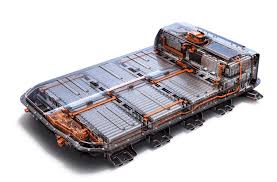
Tesla’s NMC Battery | 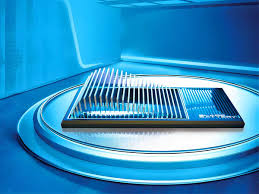
BYD Blade LFP Battery | 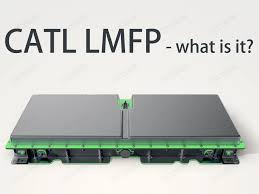
CATL LMFP battery |
Another cathode currently under development is the LMFP (lithium-manganese-iron phosphate) formula. This innovative formula enhances energy density by approximately 14%, boasts a prolonged lifespan, and maintains optimal energy density. Additionally, it is cost-effective.
The LFP (lithium-iron-phosphate) formula is currently the most popular. By 2024, LFP had reached nearly 40% of the global automotive market, accounting for more than half of global EV battery deployments worldwide. The LFP cathode is more cost-effective than NMC and has a longer lifespan. LFP helps reduce dependence on cobalt and nickel, two metals whose prices fluctuate. The origin of cobalt is a concern for manufacturers, and LFP addresses this issue as well.
Recent advancements in battery technology have led to new opportunities for businesses. Prominent examples of these innovations include silicon anodes, solid-state batteries, and sodium-ion batteries, which are being promoted for their ability to enhance energy density, cost efficiency, and overall performance. Experts in the field predict that the market for electric vehicle batteries will diversify. Automakers will select different chemical compositions and formats depending on their needs. The industry’s strategic objective is to reduce vehicle costs as charging infrastructure expands, thereby eliminating the need for high-capacity batteries.
Tesla, now in second place
Given the numerous uncertainties surrounding electric vehicles (EVs), market fluctuations, and new regulations, all manufacturers are strategically positioning themselves to better face the future. Tesla has decided to halt production of its two flagship models, the S and X, in order to reduce its dependence on cobalt and focus on range. According to the company’s executives, this decision is driven by several factors: the vehicles’ aging architecture, increasingly strict safety standards, and the company’s shift toward future-oriented projects such as the Cybercab, Optimus, and Semi.
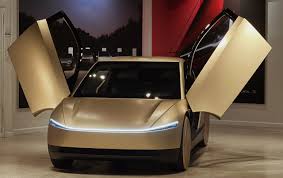
Cybercab | 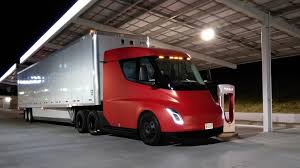
Optimus | 
Semi |
Tesla has relinquished its position as the world’s leading electric vehicle manufacturer. Chinese automaker BYD has surpassed Tesla to become the world’s leading seller of electric vehicles (EVs). BYD sold over 2.25 million units globally in 2025, while Tesla sold only 1.64 million. This milestone marks a first in the history of annual sales, as the Chinese manufacturer has now surpassed its American rival.
In 2025, global sales of electric cars increased by 20% to exceed 20 million units. In approximately 40 countries, electric cars account for 10% or more of new car sales. In terms of market share, Chinese manufacturers accounted for 60% of global electric car sales, while European and North American manufacturers accounted for 15%.
In China, an unprecedented war
The electric mobility revolution is sparking a fierce competition among China’s three leading electric vehicle manufacturers: The companies in question are BYD, CATL, and Geely, with BYD being the largest of the three. This battle is being fought on two fronts: range and charging.
Charging electric vehicles
Charging time has always been a major concern for those looking to buy EVs. The charging time for electric vehicles can vary significantly, ranging from 30 minutes to over 12 hours. The viability of this approach is contingent upon the battery capacity and the output power of the charging station. For instance, charging a 2022 Tesla Model S with a range of approximately 480 kilometers at home can take about 37 hours, while charging at a public station can take around 23 hours. The cost of public charging at supermarkets or parking lots varies depending on the chain, location, and speed of the charging stations. The average cost of a full charge is approximately $35.
In an effort to reduce charging time, leading Chinese companies BYD, CATL, and Geely are driving the “megawatt” transformation. Their advanced batteries and charging stations deliver a full charge in under ten minutes, comparable to the time it takes to fill a combustion-engine vehicle at a gas station.
- BYD – a combination of multiple technologies
The BYD Group has identified a key issue in the high-end electric vehicle market: the charging constraint. This issue has become more significant than considerations such as luxury and features. BYD is pleased to announce that it now offers charging powers of up to 1,500 kW. As Alexandre Bonhomme, product marketing manager at BYD France, explains in Le Point (04/25/2026), “What’s changing isn’t a single innovation, but the combination of several technologies.” At the core of the system is a new generation of batteries from the Shenzhen-based group, the Blade Battery 2.0, the result of six years of development. The lithium-iron-phosphate (LFP) chemistry and structure have been redesigned to handle very high power levels and deliver smoother charging curves.
Denza D9-GT 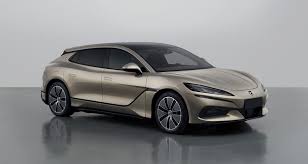
“Ready in 5 minutes, fully charged in 9, plus 3 in cold weather, so a maximum of 12 minutes. This is historic because electric charging is finally becoming as fast as filling up with gas. To support this, we will install 3,000 of these ultra-fast chargers in Europe within a year,” said Stella Li, executive vice president of the BYD Group in Paris. | 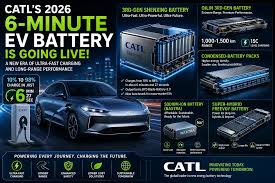
Shenxing 3 Battery “The frontiers of electrochemistry are far from being crossed,” promises the company’s president, Robin Zeng. | 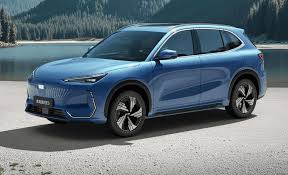
Geely EX5 |
- CATL – Multi-Chemistry Strategy
The “multi-chemistry” strategy is central to CATL’s plan to offer a solution tailored to every market segment, from small city cars to premium models, including commercial vehicles and heavy-duty trucks. This approach also mitigates the company’s exposure to price volatility in raw materials such as lithium, nickel, and cobalt.
- Geely – battery-car-charging-station trifecta
Geely’s ambitious goals and commitment to technological innovation have led the company to allocate significant resources towards its research and development. It utilizes a network of factories equipped with assembly lines capable of producing models of vastly different sizes on a single modular architecture: the 100% electric SEA platform. During a recent demonstration, the charging power reached an impressive peak of approximately 1,076 kW, which is more than one megawatt. Even at over 80% charge, the system consistently maintained over 500 kW. The logic is analogous to that of BYD, in that performance is less dependent on a single component and more on a battery-car-charging-station triad.
Range
Beyond charging, CATL is also pushing the boundaries of range. The group has unveiled a nickel-cobalt-manganese (NMC) battery capable of delivering up to 1,000 kilometers on a single charge, as well as a new version of its Qilin high-energy battery claiming up to 1,500 kilometers of range in a sedan—enough to cover a journey from London to Barcelona or Paris to Rome. These figures are based on favorable certification cycles rather than WLTP, the European standard, but they help alleviate range anxiety, especially in regions where the charging network remains insufficient.
These technologies necessitate advanced charging infrastructure and large-scale implementation. CATL and BYD, which together account for more than half of the global market for electric vehicle batteries, are currently investing billions to advance battery cell chemistry.
Chinese Government Subsidies for Its Automotive Industries
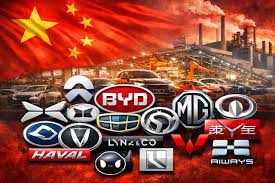 The rapid ascent of Chinese electric vehicle manufacturers was not an accident. China has transitioned from a domestic consumer market to an export market. From 2020 to 2023, China—which previously exported minimal automobiles—emerged as the global leader in automotive exportation, surpassing Japan and Germany in this regard. While the country had a trade deficit in the automotive sector in 2019, it now records an annual trade surplus of $100 billion in the sector. “It is imperative that we cease to operate under the assumption that China is satisfied with merely duplicating and producing lower-priced versions of European products. That era is over,” stated Julie Ecoiffier, head of Ecoiffier Games. Chinese entrepreneurs are no longer merely imitators; they have evolved into “gladiators” driven by the aspiration to thrive economically, as elucidated by Taiwanese entrepreneur Kai-Fu Lee, the “oracle of artificial intelligence” based in China, in an interview with Le Point on April 8, 2019.
According to an analysis by France’s Rexecode Institute published on November 25, 2025, “China’s hyper-competitiveness is based on production costs that are significantly lower than those of its European competitors and a policy of massive support for production and exports.”
As part of its National Medium- and Long-Term Plan for Science and Technology Development, launched in 2006, China has invested over $230 billion since 2010 to develop its electric vehicle industry. However, experts estimate that the actual figure is even higher. This figure accounts for five types of support: national purchase subsidies, 10% VAT exemption, government funding for infrastructure, research and development support programs, and government purchases of electric vehicles. In addition, purchase incentives for electric vehicles should be implemented in select major cities, offering benefits such as reduced land costs, favorable energy prices, and low-interest loans for manufacturers. Furthermore, comprehensive support for the entire sector is essential, including battery manufacturers and the mining of minerals necessary for battery production.
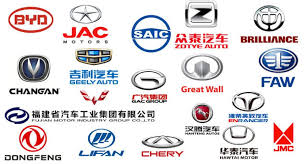 This targeted policy by the Chinese government has resulted in China’s dominance of the international market for EVs and their batteries. The government’s support for Chinese manufacturers has enabled them to compete with international competitors who had relocated their operations to China, seeking access to affordable labor. Despite tariff barriers imposed by competing countries, including the United States and European nations, China has found profitability through exports. This independence from external factors gives the Chinese the freedom to choose the countries where they want to sell. They are strategically targeting neighboring countries with strong economies, including Eastern Europe and Latin America, and are making significant inroads into African countries, thereby avoiding customs restrictions that are not clearly justified.
Finally, China’s large electric vehicle manufacturers offer a substantial, automated, and adaptable industrial base that can overcome challenges and produce exceptional vehicles for experienced drivers. Europe and America must accelerate their efforts to catch up.
References
International Energy Agency, Global EV Outlook 2025 – Expanding sales in diverse markets, July 2025 Website: www.iea.org
BBC, China’s BYD overtakes Tesla as world’s top EV seller, London, January 2, 2026
Hu Fu & Mona Alariq, Critical mineral supply chains and the economics of energy transition: A carbon decomposition perspective of growth and decoupling, Geoscience Frontiers, Volume 17, Issue 1, January 2026
- www.rexecode.fr
- www.transitionenergies.com
- www.lepoint.fr
Comments on the April article: Minerals in the Secrets of the Oceans
“Excellent article, Sister. Still reading through it.” H.E. Louis Watum, DRC
“I read your article in the early hours of the morning as the sun was just rising. I found the article to be very interesting. You have chosen to address a complex subject. The primary concern is whether this exploitation would actually be beneficial for humanity. Given the potential economic advantages and the risks to the oceans, the debate merits serious consideration. I would also like to mention that I find your work to be quite enjoyable. Your insights are enlightening and raise some fundamental questions. It is always a pleasure to discover your work.” Samantha Mwenda, DRC
“Maguy, your article reminded me of the movie ‘Titanic,’ in which the main character, a woman who had survived the tragedy, said: ‘A woman’s heart is like an ocean. You can’t know what’s inside…’ Keep keeping us informed, my dear sister!” Aisha Katabana, USA
“Mauwa wetu! Despite remaining in the field of mining, the approaches to analyses are varied and interesting. Today’s post is of a scientific nature, yet it boasts a poetic title: “The Secrets of the Oceans.” Greetings, Madam! Your versatility places you among the most innovative minds of our time, including Jacques Attali, who believed in the importance of experts sharing their insights across various fields. I would like to express my sincere appreciation for your efforts and encourage you to continue your excellent work!” Clérence Kimanyi, Canada